Preparing culinary meals in remote environments requires equipment that bridges the gap between packability, thermal efficiency, and structural resilience. Equipping your wilderness kitchen with the best camping cookware ensures that meal preparation remains a rewarding highlight of your excursion rather than a frustrating exercise in burning food and wasting fuel. Whether you are melting snow on a high-altitude mountaineering expedition, boiling water on a fast-and-light solo trek, or simmering a multi-course dinner over a multi-burner tailgate stove, the precise composition and engineering of your pots and pans dictate your energy efficiency and overall meal quality.
Modern wilderness cookery has advanced significantly beyond simple heavy mess kits and basic steel tins. Selecting the best camping cookware for your individual trip profile requires a thorough evaluation of metallurgy, heat dispersion characteristics, nesting ergonomics, and surface safety. This comprehensive field guide delivers an exhaustive technical breakdown of cookware alloys, structural design innovations, group capacity logistics, and maintenance protocols to assist you in assembling an optimized outdoor kitchen tailored to your environmental demands.
Thermal Dynamics and Heat Distribution in Outdoor Cooking
Understanding the fundamental principles of thermal transfer is essential when evaluating backcountry kitchen equipment. Compact canister burners and liquid fuel stoves generate highly concentrated heat columns that can quickly create extreme thermal hot spots on thin-walled vessels. Integrating the best camping cookware into your kitchen kit mitigates these localized temperature spikes, distributing thermal energy evenly across the bottom surface to support controlled simmering and prevent carbonized food sticking to the pan.
Beyond material conductivity, the physical geometry of a pot dramatically impacts its overall thermal efficiency and fuel consumption rate. Wide, short vessels present a significantly larger surface area directly to the rising flame column, capturing ambient heat far more effectively than tall, narrow mug-style pots. Structural wall thickness acts as a thermal buffer, absorbing the initial peak heat of the burner and diffusing it uniformly across the base, which dramatically reduces the total volume of fuel required over extended wilderness itineraries.
Hard-Anodized Aluminum as the Trail Benchmark
Hard-anodized aluminum remains the undisputed industry standard for versatile, high-performance backcountry cookware. Through an advanced electrochemical bath, the natural oxide surface of standard aluminum is converted into an ultra-tough layer that is significantly harder than stainless steel, exceptionally resistant to abrasion, and non-reactive to acidic foods. When choosing the best camping cookware crafted from hard-anodized aluminum, outdoor cooks achieve exceptional thermal dispersion and lightweight performance without compromising on structural rigidity or longevity.
Because aluminum possesses outstanding thermal conductivity, heat spreads rapidly from the center of the pot out to the side margins, eliminating cold spots and reducing cook times. This thermal efficiency makes hard-anodized vessels the premier option for complex outdoor menus that require delicate heat management, such as grain dishes, sauces, and fresh scrambles. Furthermore, the hard-anodized coating prevents raw aluminum from leaching into meals, ensuring long-term health safety and ease of maintenance in pristine natural environments.
Stainless Steel Durability for Basecamp and Open Flames
Stainless steel represents the benchmark for raw structural integrity, scratch resistance, and raw physical toughness in demanding outdoor environments. Unlike softer metals, high-grade stainless steel can withstand aggressive scrubbing with abrasive sand, direct contact with metal utensils, and heavy impacts without denting or warping. While stainless steel lacks the rapid thermal conductivity of aluminum, cookware engineered with encapsulated aluminum core bases bridges this performance gap by spreading heat efficiently across the pan base.
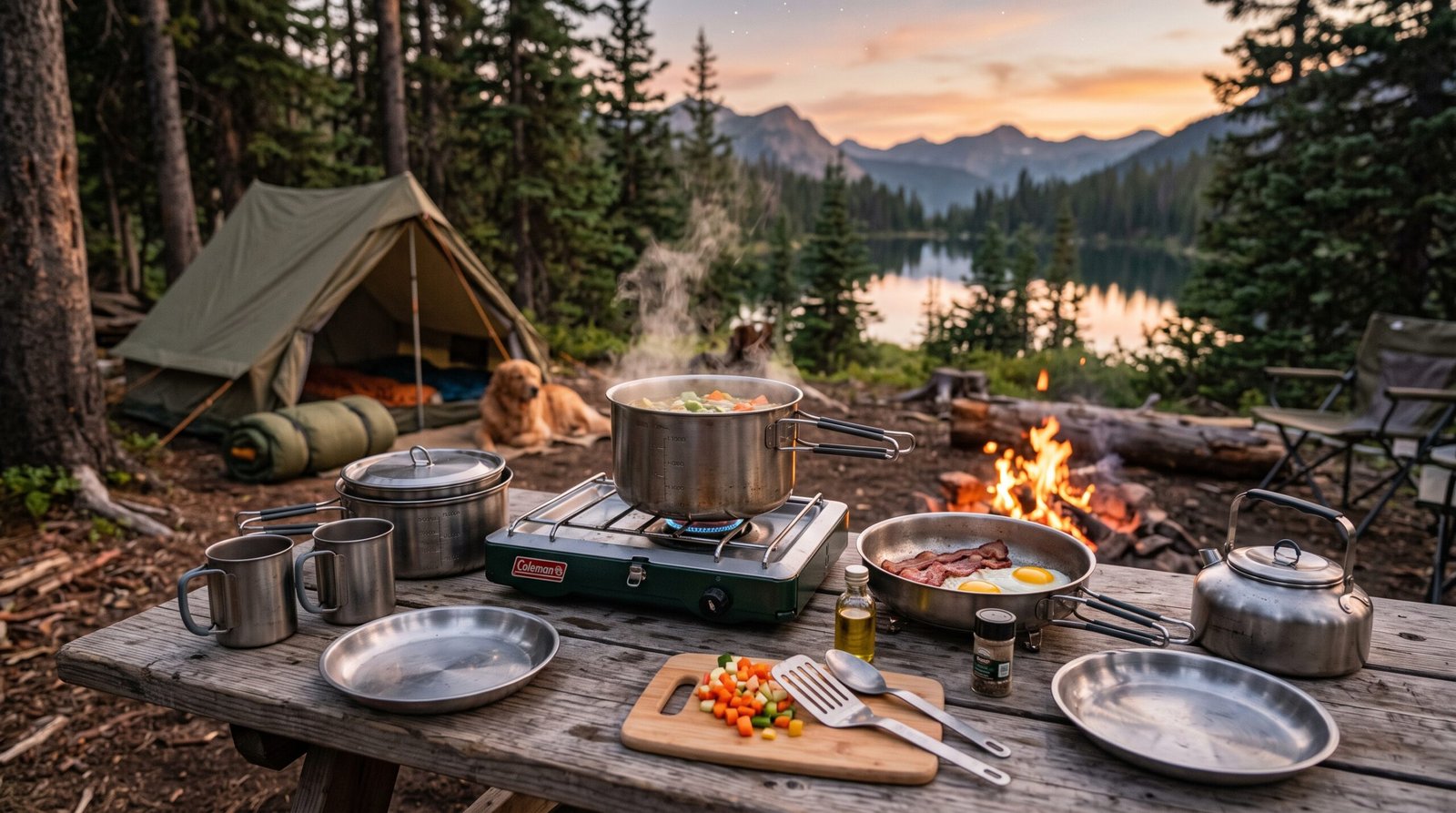
For vehicle camping, outfitters, and long-term wilderness camps, stainless steel offers unrivaled reliability under continuous heavy use. It remains entirely non-reactive to all ingredients, allowing campers to cook acidic tomato stews, citrus marinades, and salty soups without degrading the metal. Additionally, stainless steel cookware tolerates exposure to extreme temperature shifts and direct wood embers, making it an indispensable choice for traditional campfire cooking where burner control is unavailable.
Cast Iron and Carbon Steel in Basecamp Gastronomy
Cast iron cookware occupies a unique and revered place in stationary camping setups, offering unmatched thermal mass and radiational heating capabilities. Once fully heated, cast iron holds immense thermal energy and radiates it uniformly, allowing cooks to sear meats, bake breads, and slow-cook complex dishes over campfire coals. When properly seasoned with polymerized oils, cast iron forms a resilient, natural non-stick patina that improves with every use and avoids synthetic chemical coatings.
Carbon steel cookware provides many of the heat retention and non-stick benefits of traditional cast iron while offering a noticeable reduction in total weight and faster thermal responsiveness. Carbon steel skillets respond quickly to adjustments in burner output while developing the same protective seasoned surface as heavy iron pans. While both metals are far too heavy for backpacking, they serve as foundational centerpieces for overland expeditions, family car camping, and hunting base camps where weight limits are secondary to culinary quality.
Titanium Performance for Fast and Light Excursions
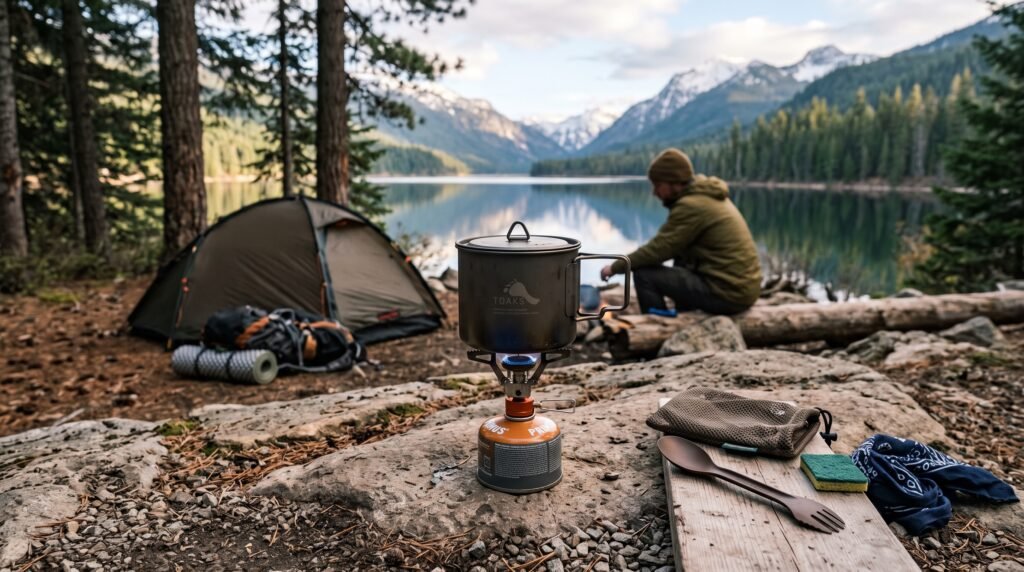
Titanium stands as the ultimate material for fast-and-light mountaineers, long-distance thru-hikers, and ultralight minimalist backpackers. Boasting an extraordinary strength-to-weight ratio, titanium pots feature extremely thin walls that drastically shave ounces from a pack while remaining virtually crush-proof. Identifying the best camping cookware within the titanium category focuses primarily on minimal weight, rapid water boiling capabilities, and seamless integration with compact canister stoves for rehydrating freeze-dried meals.
However, titanium exhibits relatively low thermal conductivity compared to aluminum, which causes burner heat to remain concentrated directly above the flame head. This intense concentration can create localized scorching if users attempt to cook dense grains, eggs, or fresh foods that require slow simmering. Consequently, titanium excels best when utilized as a dedicated boiling vessel for water, hot beverages, and dehydrated meal preparation, where speed and weight savings outweigh complex culinary versatility.
Technical Material Comparison and Performance Metrics
Evaluating the performance metrics of primary outdoor cookware materials allows campers to select gear tailored precisely to their operational demands. The table below outlines the core physical characteristics, thermal behaviors, durability thresholds, and primary application profiles for hard-anodized aluminum, stainless steel, titanium, and cast iron.
| Cookware Material | Weight Class | Thermal Conductivity | Durability Rating | Primary Camp Use Case |
| Hard-Anodized Aluminum | Lightweight | Excellent | High | General Backpacking & Extended Trekking |
| Stainless Steel | Heavyweight | Moderate | Exceptional | Car Camping, Base Camp & Fireplace Cooking |
| Titanium | Ultralight | Fair | High | Fast-and-Light Solo Backpacking |
| Cast Iron | Heavyweight | Moderate (High Retention) | Lifetime | Overland Camping, Dutch Oven Baking & Open Fire |
Choosing the optimal metal requires balancing pack weight constraints against your intended cooking style and group size. Ultralight backpackers benefit most from the extreme weight savings of titanium, whereas multi-day trekking groups achieve better overall fuel economy with hard-anodized aluminum. Stationary base camps prioritize the thermal consistency of heavy stainless steel or cast iron to handle varied culinary tasks without burning food.
Engineering Innovations in Heat Exchangers and Nesting Systems
Modern backcountry engineering has introduced advanced structural features that maximize kitchen efficiency and minimize overall pack volume. Heat exchanger rings—composed of folded metal fins welded around the pot base—trap radiant energy and hot exhaust gas that would otherwise escape around the sides of the vessel. Integrating the best camping cookware featuring heat exchanger bases increases overall thermal efficiency by up to thirty percent, substantially reducing boil times and extending fuel supply lifetime during long expeditions.
Ergonomic nesting design transforms individual kitchen components into a consolidated, rattle-free unit for seamless packing. Advanced cooksets are specifically designed so that pots, deep-dish bowls, insulated mugs, strainers, and even standard fuel canisters interlock tightly inside the main vessel. Secure locking handles with silicone touchpoints fold flush against the pot exterior, protecting internal coatings from abrasion during transit while ensuring complete control during heavy pours.
Non-Stick Surface Science and Eco-Friendly Ceramic Coatings
Non-stick internal coatings greatly enhance field cooking convenience by minimizing food adhesion and drastically reducing the water required for post-meal cleanup. Traditional polytetrafluoroethylene coatings deliver exceptional food release properties, but they require gentle plastic or wooden utensils to prevent surface gouging. Furthermore, traditional non-stick surfaces can experience thermal breakdown if subjected to high dry heat on high-output backpacking burners.
Modern ceramic non-stick formulations have transformed outdoor cookery by providing a durable, high-heat alternative free of fluoropolymers, PTFE, and PFOA. Ceramic coatings are fused directly to aluminum substrates at high temperatures, creating a scratch-resistant finish that safely withstands higher cooking temperatures without off-gassing. Selecting the best camping cookware engineered with ceramic non-stick technology allows campers to fry delicate foods easily while maintaining high safety standards and easy cleanup routines in remote watersheds.
Volumetric Planning and Capacity Metrics for Groups
Sizing your cookset capacity correctly relative to your group size prevents energy waste and ensures seamless meal timing in the field. Solo hikers generally require a compact single pot ranging from seven hundred to nine hundred milliliters, which provides ample volume for boiling water for freeze-dried pouches and hot drinks. Small groups consisting of two to three individuals operate most efficiently with a two-pot system totaling two to three liters, enabling simultaneous main course cooking and hot water prep.
Large wilderness groups, expedition teams, and families require high-volume cooksets ranging from four to ten liters to handle bulk batch meal preparation. Investing in the best camping cookware sized for large groups eliminates the inefficiency of cooking multiple small batches, saving substantial fuel and keeping meals synchronized. Wide-diameter base pots sit securely on sturdy multi-burner stoves, mitigating tipping hazards when managing large quantities of boiling liquid.
Stove Compatibility, Burner Profiles, and Energy Conservation
The mechanical relationship between your stove burner head and the bottom profile of your cookware dictates total system energy conversion. Micro-burners produce a tight, torch-like flame column that pairs best with narrow, deep pots designed for rapid water boiling. Conversely, broad-diameter burner heads spread thermal output across a wide radius, making them ideal partners for wide pans and large-scale cooksets that require broad heat dispersion for frying or simmering.
Environmental wind conditions represent the single greatest threat to burner efficiency, sweeping away radiant heat before it can transfer to the vessel base. Employing lightweight aluminum windscreens or selecting cookware with integrated wind skirts locks warm air around the pot walls, preserving fuel and maintaining stable boil times. Properly pairing your stove’s flame pattern with complementary pot geometry ensures peak thermal performance regardless of ambient outdoor weather.
Field Maintenance, Sanitation, and Surface Preservation
Maintaining pristine field hygiene protects expedition health while safeguarding cookware coatings against premature thermal and mechanical failure. Hot pots should never be plunged directly into cold stream water, as sudden thermal shock can warp thin metal bases and crack delicate non-stick coatings. Cleaning should be performed using soft sponges, natural abrasives like river sand for bare metals, and minimal amounts of biodegradable soap used far away from natural water sources.
Maintaining high-performance outdoor cookware relies on thermal discipline: respect the flame, avoid thermal shock, and never expose empty coated vessels to direct high heat.
Adopting disciplined storage protocols preserves gear performance throughout years of rigorous outdoor exploration. Placing soft felt liners, bandana cloths, or packable towels between nested metal pots prevents interior friction scratches during rough transport. Regularly inspecting pot handles, bail latches, and lid rivets ensures structural safety before launching into remote wilderness environments where equipment failures cannot be easily repaired.
Comprehensive Summary and Gear Selection Strategy
Selecting the best camping cookware for your personal kit comes down to choosing the precise metal and design profile that matches your preferred style of travel. Ultralight backpackers and long-distance trekkers should focus on compact titanium or hard-anodized aluminum single-pot systems that maximize fuel efficiency and fit neatly inside a pack. Car campers, overland travelers, and basecamp cooks achieve superior meal versatility by choosing heavy stainless steel or seasoned cast iron sets that handle multi-burner stoves and open fires effortlessly. Backpacking groups of two or more benefit from hard-anodized aluminum nesting sets with ceramic coatings for effortless cleanup and easy packing. Selecting gear based on these operational demands ensures a reliable, highly efficient outdoor kitchen setup on every expedition. For additional technical breakdowns, sizing formulas, and detailed gear checklists, consult the comprehensive REI Expert Guide: How to Choose Camping & Backpacking Cookware.
By evaluating thermal dynamics, non-stick safety, stove compatibility, and proper care, you can build a field kitchen that turns outdoor cooking into a seamless experience. Investing in the best camping cookware guarantees reliable meals, low fuel consumption, and long-lasting performance across many seasons on the trail.
Frequently Asked Questions
What material offers the longest lifespan for rugged outdoor cooking?
Heavy-gauge stainless steel and seasoned cast iron deliver the longest structural lifespan under harsh outdoor conditions. Stainless steel resists denting, rusting, and scratch damage from metal utensils or open wood embers. Selecting the best camping cookware built from high-grade stainless steel guarantees reliable performance across decades of rigorous field use.
How do you prevent food from burning on lightweight backpacking stoves?
Concentrated flame patterns on thin-walled pots can create hot spots that scorch food quickly. To prevent burning, choose conductive hard-anodized aluminum cookware, keep burner valves on low flame settings, and stir food continuously. Placing an ultralight flame diffuser plate between the burner head and the pot base also helps spread heat evenly across the vessel bottom.
Is ceramic non-stick coating safe for high-heat camp cooking?
Ceramic non-stick coatings are completely free of PTFE, PFOA, and toxic heavy metals, making them a safe choice for field cooking. Ceramic finishes withstand high temperatures without breaking down or releasing harmful chemical fumes into food. Choosing the best camping cookware with ceramic technology provides non-stick performance and safe, easy cleaning.
Can stainless steel cookware be used directly over an open campfire?
All-metal stainless steel cookware can be placed directly over campfire coals and open wood flames without suffering structural breakdown. Unlike aluminum pots with plastic handles, stainless steel handles intense radiant heat effortlessly. Coating the exterior base of the pot with a light layer of biodegradable liquid soap before cooking makes soot removal much easier during cleanup.
What is the ideal pot volume per person when planning group camp meals?
A reliable baseline standard for outdoor meal planning is approximately five hundred to seven hundred and fifty milliliters of pot volume per individual. For a group of four campers, utilizing a cookset with a primary pot capacity of two and a half to three and a half liters ensures adequate space for one-pot pasta meals, stews, or boiling water without spillovers.